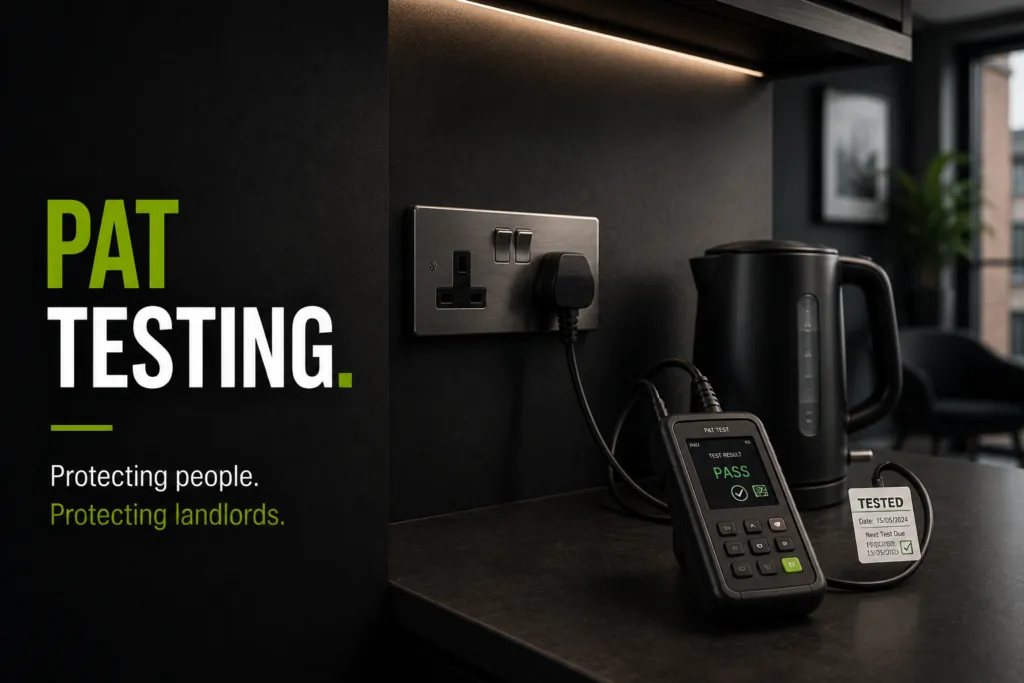
Portable Appliance Testing (PAT) involves the inspection and testing of electrical appliances within a property to ensure they are safe for use. This applies to any portable electrical items provided by a landlord, such as kettles, microwaves, toasters, lamps, and other plug-in equipment. The purpose of PAT testing is to identify faults, damage, or wear that could present a risk to occupants.
While PAT testing is not a fixed legal requirement with a defined frequency, landlords have a legal duty under the Electrical Equipment (Safety) Regulations 2016 and the Landlord and Tenant Act 1985 to ensure that all electrical appliances supplied within a rental property are safe at the start of a tenancy and maintained in a safe condition throughout.
PAT testing is widely recognised as the most effective way of demonstrating compliance with these obligations. It is generally recommended that appliances are tested at regular intervals, typically annually, depending on the type of property and level of use.
A valid PAT test record provides clear evidence that appliances have been checked and are safe, supporting landlords in meeting their responsibilities and maintaining a safe living environment for tenants.
Book this service
One partner for every certificate.
Send us instructions however you prefer – email, phone or WhatsApp.