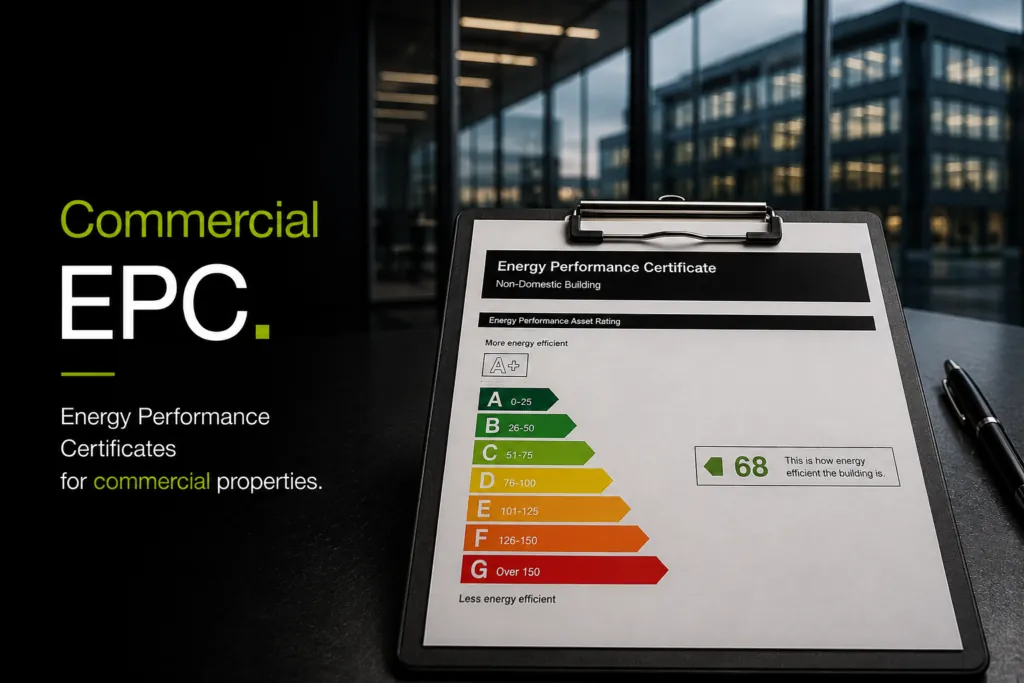
A Non-Domestic Energy Performance Certificate (EPC) provides an assessment of a commercial property’s energy efficiency, rating it on a scale from A (most efficient) to G (least efficient). The assessment considers factors such as heating, cooling, ventilation, lighting, and building fabric, offering a clear overview of energy performance along with recommendations for improvement.
For commercial properties in England, a valid EPC is a legal requirement under the Energy Performance of Buildings (England and Wales) Regulations 2012. An EPC must be in place before a property is marketed for sale or lease and made available to prospective buyers or tenants at the earliest opportunity.
A Non-Domestic EPC is valid for 10 years and under current Minimum Energy Efficiency Standards (MEES), commercial properties must achieve a minimum rating of E or above to be legally let, unless a valid exemption is registered.
Looking ahead, MEES regulations are set to tighten, with proposed requirements for commercial properties to reach a minimum rating of C by 2027 and B by 2030. As a result, maintaining an up-to-date EPC and planning for energy improvements is becoming increasingly important for landlords and investors seeking to protect asset value and ensure future compliance.
Non-Domestic EPCs are required across a wide range of property types, including offices, retail units, industrial units, and mixed-use developments, forming a key part of compliance and long-term asset management.
Book this service
One partner for every certificate.
Send us instructions however you prefer – email, phone or WhatsApp.